

SPEAC’s Special Populations group was pleased to present four posters at the 2026 Annual Meeting of the European Society for Paediatric Infectious Diseases (ESPID), highlighting ongoing work to strengthen vaccine safety research and surveillance for pregnant women, fetuses, newborns, and young infants.
Together, the presentations reflected the breadth of SPEAC’s work to support maternal immunization research, from developing practical guidance and standardized safety definitions to evaluating implementation and generating evidence to inform public health decision-making.
Supporting the Inclusion of Pregnant and Lactating Women in Vaccine Research
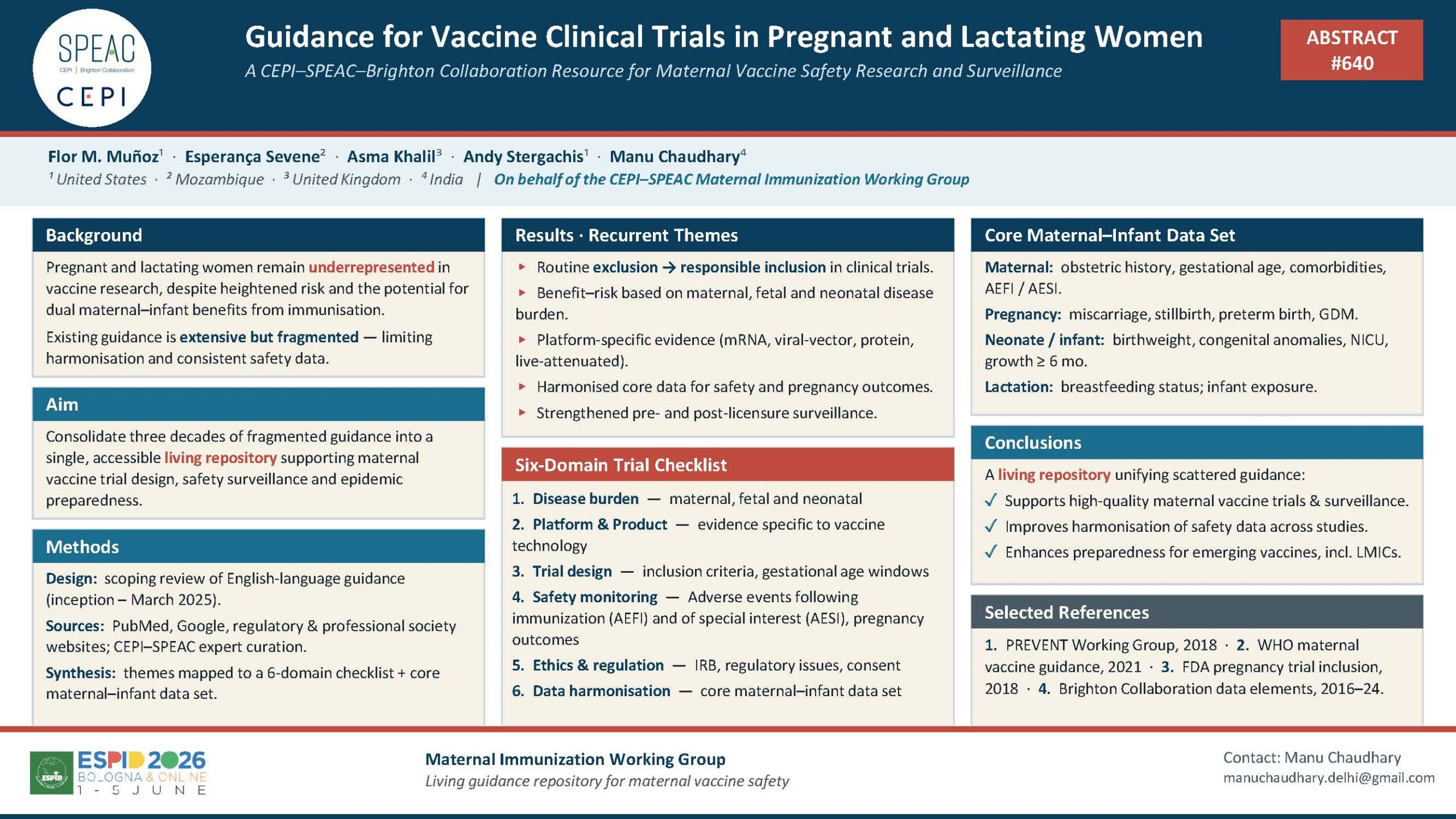
One poster presented new guidance for vaccine clinical trials involving pregnant and lactating women. The resource brings together decades of recommendations into a practical, living repository designed to support clinical trial design, safety monitoring, data harmonization, and epidemic preparedness.
By promoting more consistent approaches to maternal vaccine research and surveillance, the guidance aims to improve the quality and comparability of safety data across studies, settings, and regions.
Advancing Standardized Safety Monitoring
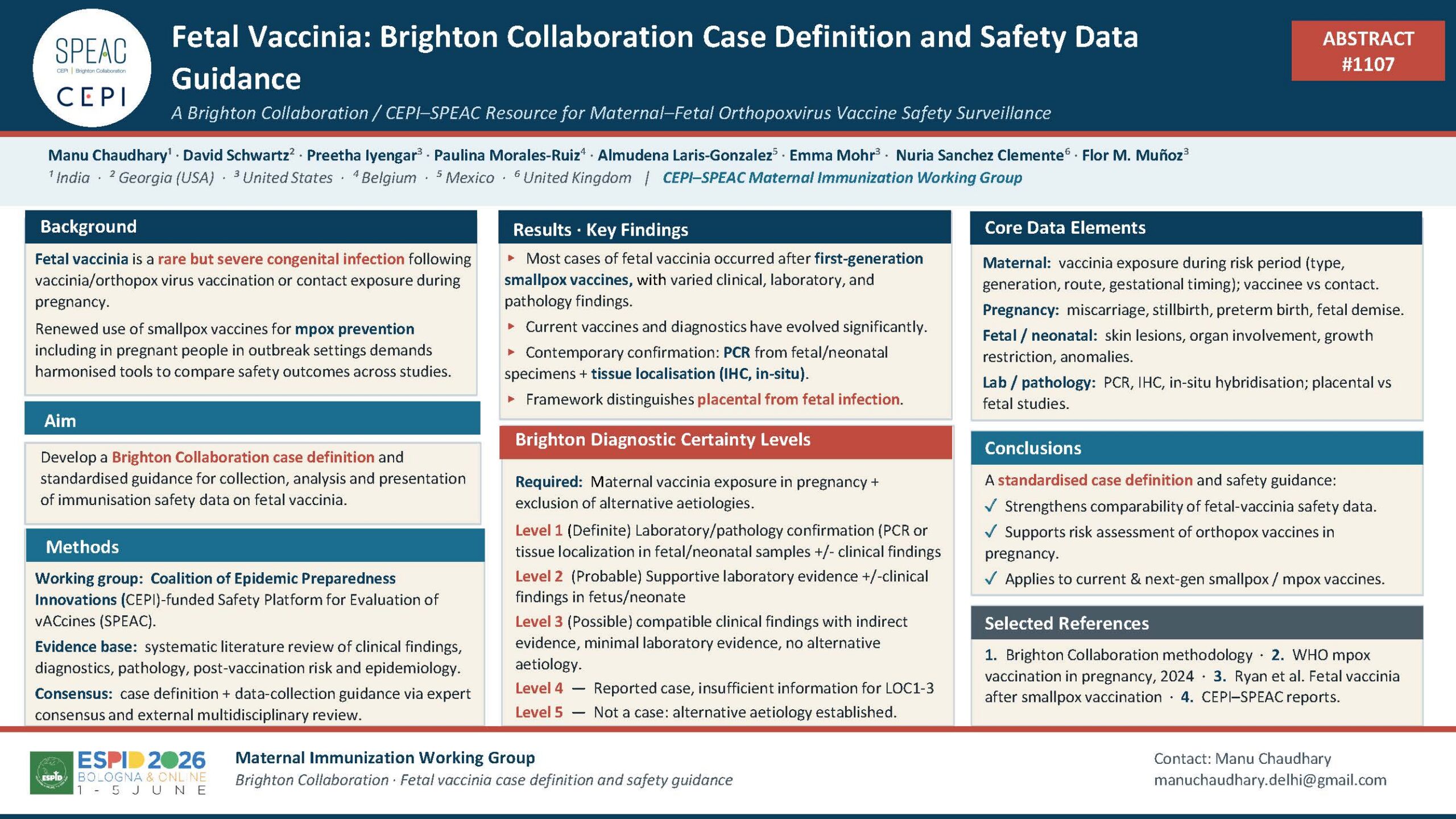
A second presentation highlighted the development of the Brighton Collaboration Case Definition and Safety Data Guidance for fetal vaccinia.
Although fetal vaccinia is rare, the renewed use of orthopoxvirus vaccines in response to mpox outbreaks underscores the importance of standardized approaches for monitoring and evaluating safety outcomes during pregnancy. The guidance provides a common framework for data collection, analysis, and reporting, helping researchers and public health professionals compare findings across clinical studies and surveillance systems.
Evaluating Maternal Immunization Safety Tools
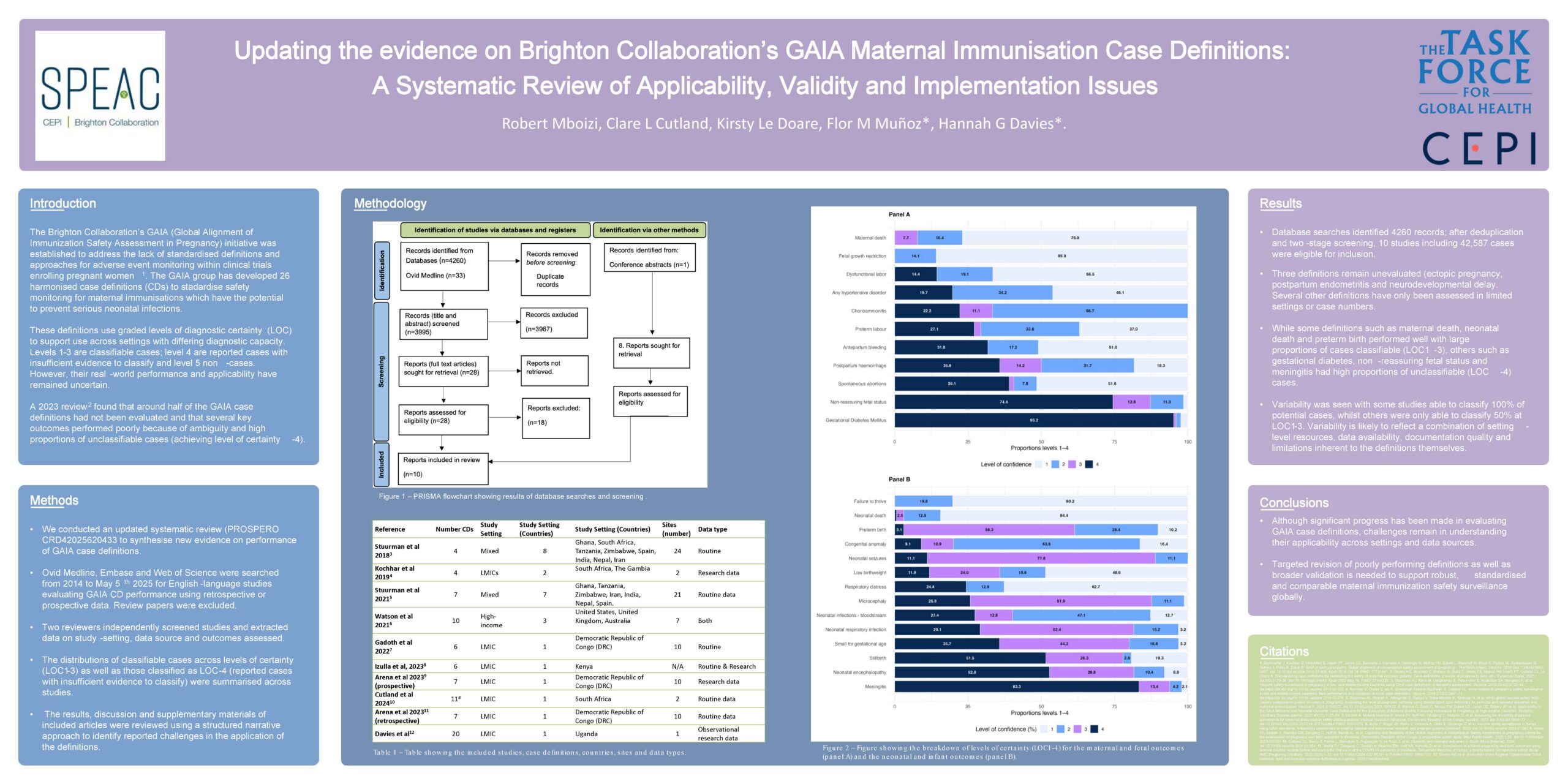
Building on earlier Brighton Collaboration efforts, a third poster presented an updated systematic review examining the applicability, validity, and implementation of the GAIA – Global Alignment of Immunization Safety Assessment in Pregnancy – case definitions.
The review assessed how these standardized maternal, fetal, neonatal, and infant outcome definitions are being used across countries and healthcare settings. The findings offer valuable insights into where the definitions perform well and where further evaluation or refinement could strengthen global maternal immunization safety surveillance.
Generating Evidence on Maternal Vaccination and Infant Outcomes
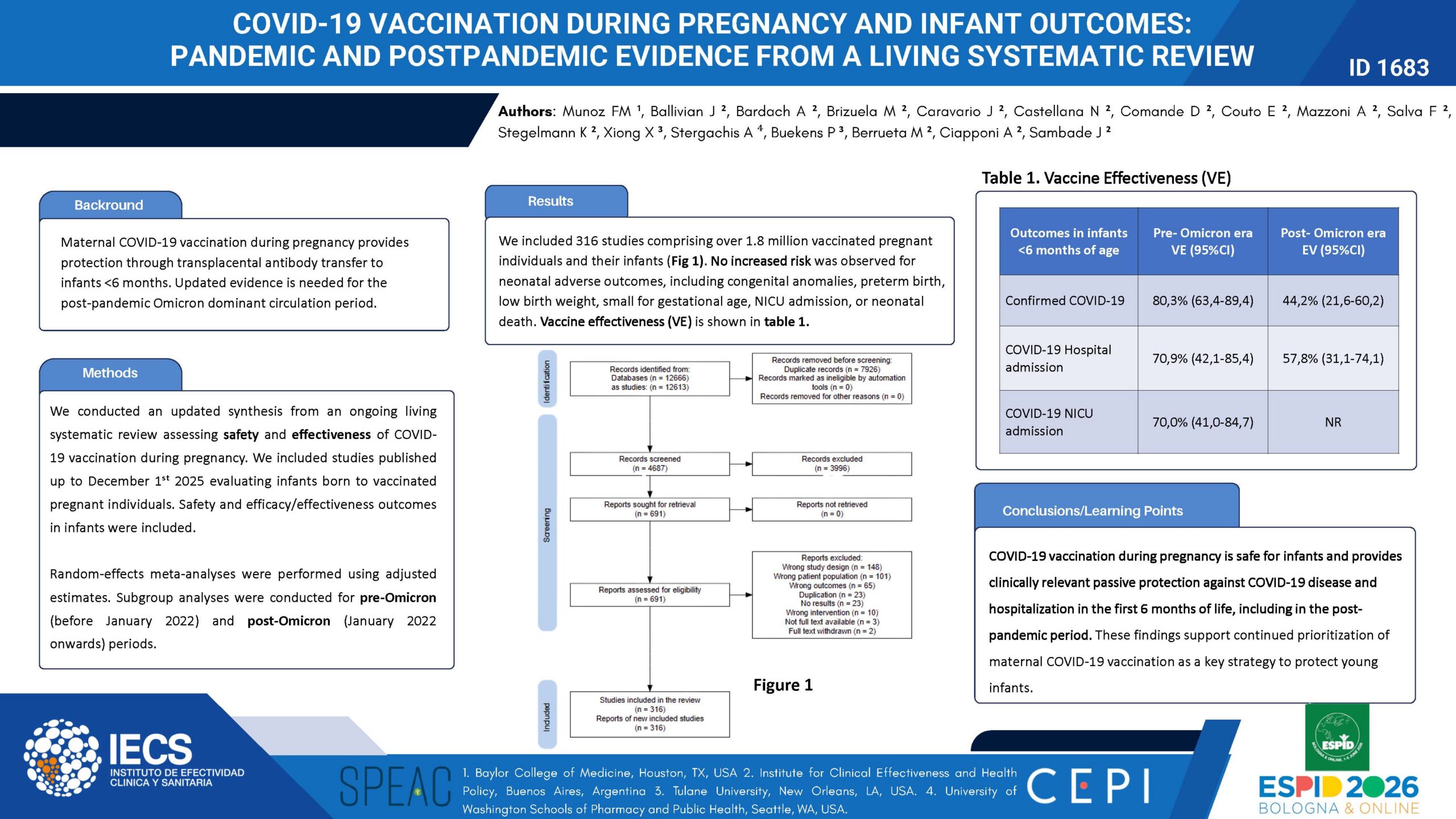
The fourth poster shared updated findings from a living systematic review evaluating COVID-19 vaccination during pregnancy and infant outcomes.
Drawing on evidence from more than 1.8 million vaccinated pregnant individuals and their infants, the review found no increased risk of adverse neonatal outcomes. It also demonstrated continued protection against COVID-19 disease and hospitalization among infants during their first six months of life. These findings reinforce the important role maternal immunization can play in protecting both pregnant individuals and their infants.
Strengthening Vaccine Safety for Special Populations
Collectively, these presentations reflect SPEAC’s commitment to advancing harmonized vaccine safety science for populations that have historically been underrepresented in clinical research.
Through guidance documents, case definitions, evidence reviews, and implementation research, SPEAC continues to support the generation of high-quality, comparable data needed to evaluate vaccine safety and inform policy decisions around the world.
We thank the investigators, collaborators, and working group members who contributed to this work and represented SPEAC at ESPID 2026.